

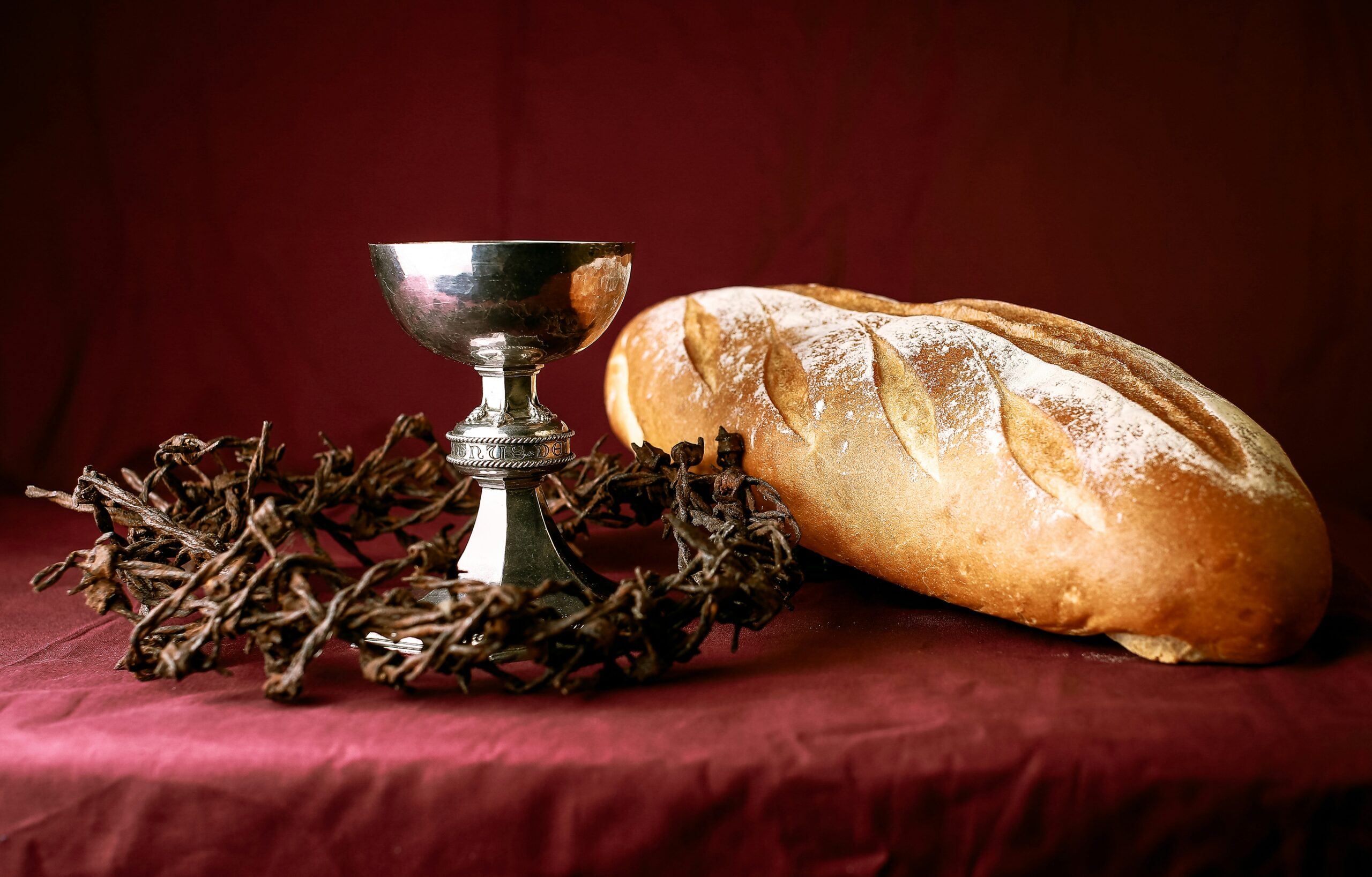
At His final Passover meal with His disciples, Jesus took bread and wine and said words that have echoed through the centuries: “Do this in remembrance of Me” (1 Corinthians 11:24). They ate. They drank. And the apostles later explained the weight of that moment: “For as often as you eat this bread and drink the cup, you proclaim the Lord’s death until He comes” (1 Corinthians 11:26). But what exactly were they meant to remember? And what does it truly mean to proclaim His death until He returns?
For many believers, communion has become a quiet, solemn ritual, sometimes heavy with forced emotion. I remember growing up taking communion once a month, holding a small cracker and a thimble of grape juice, trying to summon the “right” feelings. Was I supposed to feel sad? Grateful? Loving? The moment often became more about manufacturing emotion than understanding meaning. But the table Jesus set was never meant to be sentimental. When viewed through its Jewish and Kingdom context, the bread and the cup reveal something far more profound, practical, and hope-filled.
The ritual often called the Eucharist comes from the Greek word eucharisteō, meaning “to give thanks.” In the New Testament world, this was not a mystical sacrament disconnected from daily life, but a familiar Jewish table practice. It involved blessings spoken before food and a benediction of grace after meals—often accompanied by a shared cup of wine. This is exactly what we see when Jesus takes the cup, gives thanks, and speaks of the covenant in His blood (Matthew 26:27–29). Paul refers to this same practice when he calls it “the cup of blessing” (1 Corinthians 10:16).
Understanding this context clears away much confusion. The bread and the cup were not presented as a mechanism for salvation, forgiveness, or mystical transformation of substance. Salvation comes through faith in Jesus alone. Instead, the table functions as something deeply biblical and covenantal: a remembrance with an eschatological focus—a looking forward to what God has promised to complete.
To grasp this, we must remember the message Jesus had been proclaiming from the beginning: “Repent, for the kingdom of heaven is at hand” (Matthew 3:2). He announced an imminent day of judgment, the defeat of evil, the vindication of the righteous, and the arrival of God’s Kingdom in fullness. The disciples believed Him. They expected Him to ascend the throne in Jerusalem, defeat the nations, resurrect the dead, and gather the righteous around the table of Abraham, Isaac, and Jacob for the great Messianic Banquet (Matthew 8:11).
That is why they followed Him to Jerusalem with such expectation. That is why James and John’s mother asked for seats at His right and left in the Kingdom (Matthew 20:21). They were thinking about banquet seating. Victory. Celebration. Covenant fulfillment.
But at the Master’s Passover table, their expectations were shattered—and reframed. Jesus told them plainly that He was going to die. He would be betrayed. He would be struck down. They would scatter. And yet, He assured them their hope was not lost. He promised that He would eat this Passover with them again. He would drink the fruit of the vine with them again. They would recline together at His table in the Kingdom (Luke 22:28–30).
This is where the bread and the cup take on their full meaning.
In Scripture, remembrance is not passive nostalgia. In biblical thought, to “remember” means to act in faithfulness to covenant obligations. When God “remembered” Noah, He ended the flood. When God “remembered” Sarah and Rachel, He fulfilled His promise and opened their wombs. Remembrance leads to action. It invokes covenant faithfulness.
Judaism is filled with such remembrances. Passover remembers the Exodus. Sabbath remembers creation and redemption. The priest carried the names of Israel before God as a memorial. Sacrifices rose as remembrances before the Lord. These were covenant gestures, actions that called God to act according to His promises.
This is how we must understand the bread and the cup.
When Jesus said, “This cup is the new covenant in My blood” (1 Corinthians 11:25), He was instituting a covenant remembrance. When believers eat the bread and drink the cup, they are not proclaiming His death to unbelievers. They are proclaiming it before God. They are calling God to remember the merit of the Messiah’s suffering, His atoning death, and His faithfulness—and to act by bringing forgiveness, redemption, and ultimately the return of the King.
This is why Paul says the meal proclaims the Lord’s death until He comes. The table looks backward to the cross and forward to the Kingdom. It is not primarily about the Passover of the past, but the Passover of the future. It anticipates the Wedding Supper of the Lamb (Revelation 19:9), the great banquet Isaiah saw when death is swallowed up forever and tears are wiped away (Isaiah 25:6–9).
The Kingdom of God does not leave us floating on clouds with harps. It ends with a table. A feast. A restored world. A reunited people. A victorious Messiah reclining with His redeemed.
So when we take the bread, we invoke the remembrance of Jesus’ body given for us. When we take the cup, we invoke the remembrance of His blood poured out for the forgiveness of sins. And in doing so, we petition heaven: Remember Him. Act on His behalf. Complete what He began. Jesus come back. Bring the Kingdom.
This is the simple meaning of a simple gesture.
The table is not about forced emotion. It is about faithful expectation. It is a proclamation of trust in God’s covenant promises. It is a Kingdom prayer enacted with bread and wine. And one day—because God always remembers—Jesus will finally eat and drink with His disciples again, at the table of the redeemed, in the fullness of the Kingdom of God.
That is what it means to “do this in remembrance of Me.”